BB sets different rules for banks, finance companies to recover default loans
 Symbolic Image
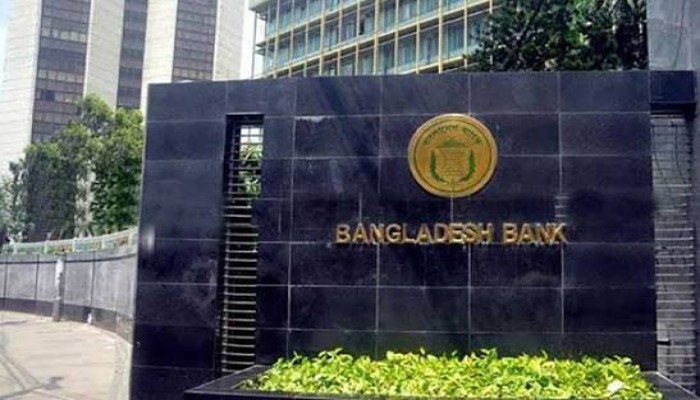
Bangladesh Bank has introduced different rules for banks and finance companies regarding the withdrawal of lawsuits by borrowers seeking policy support to repay defaulted loans.
Under the rules for banks, borrowers must withdraw writ petitions and other lawsuits filed against the concerned bank, Bangladesh Bank and the government before their applications for policy support can be considered. They must also submit an affidavit confirming the withdrawal of the cases.
However, banks will not be allowed to provide borrowers with any written assurance in advance that they will receive policy support.
For finance companies, borrowers can first obtain written in-principle approval after their applications and business viability are assessed. They will then have to complete the process of withdrawing the lawsuits and submit the required affidavit.
Bangladesh Bank issued the two separate circulars under the relevant provisions of the Bank Company Act, 1991 and the Finance Company Act, 2023.
The circular for banks was issued on 29 July under Section 45 of the Bank Company Act, 1991, while the directive for finance companies was issued on 17 August under Section 41 of the Finance Company Act, 2023.
The differing conditions have raised questions among stakeholders, particularly over why borrowers of finance companies can receive in-principle approval before withdrawing lawsuits, while bank borrowers must withdraw their cases before their applications can be considered.
Concerns over uncertainty
In the case of banks, borrowers face uncertainty because they must withdraw lawsuits without receiving any written assurance that policy support will subsequently be granted.
Stakeholders fear this could discourage borrowers from seeking the facility and ultimately undermine efforts to recover defaulted loans.
For finance companies, however, the rules provide greater certainty. Once the borrower receives written in-principle approval and subsequently withdraws the cases and submits the affidavit, the terms of the approved policy support cannot be changed.
The initiative is believed to have been taken to accelerate the recovery of defaulted loans and reduce the growing number of loan-related lawsuits.
Loan recovery hampered by litigation
The lengthy legal process surrounding loan recovery remains a major concern for the banking sector.
More than 72,500 cases were pending before money loan courts as of February 2024, involving more than Tk1.78 lakh crore, according to a report by a relevant task force.
A loan dispute between Janata Bank and Green Tanneries illustrates the problem. The case, involving Tk18 crore, was filed in 2004 but remained unresolved in 2026 despite 104 hearings.
A six-month stay order issued by the High Court in the case remained in force for nearly eight years, according to the report.
Meanwhile, bank loans worth Tk1,82,419 crore remained stuck at the end of 2025 because of court stay orders, according to relevant data.
Bankers and experts say prolonged litigation and stay orders are significantly delaying loan recovery and that effective measures are needed to resolve the problem.
Shahjalal Islami Bank Managing Director Mosleh Uddin Ahmed, Bangladesh Institute of Bank Management (BIBM) Director General Dr Md Ejazul Islam, and Bangladesh Bank Executive Director and spokesperson Arif Hossain Khan have commented on the issue.
Tk60,000 crore incentive fund
Meanwhile, Bangladesh Bank is also considering changes to a Tk60,000 crore incentive fund introduced to increase credit flow.
Loans under the fund carry a maximum interest rate of 7%, with an employment-generation target of 2.5 million.
However, loan disbursement has remained slow even four months after the initiative was launched. The central bank is therefore considering relaxing some conditions and reducing the interest rate.
The success of the measures to recover defaulted loans will depend on their effective implementation, faster disposal of loan cases and stronger action by banks and finance companies to recover outstanding dues.
Source: Kalbela

 Symbolic Image